Maker Projects
Children's Toy Box
Summary
When rediscovering the purpose of a box, our group was wondering how we would hack its shape, size, and configuration, while ensuring that its purpose was practical and useful. The idea of children’s toys then came to our heads. Children’s toys tend to get very messy, inconveniencing parents with cleanup duties in different organizational bins and teaching discipline. Would this be improved with the introduction of an interactive storage box that can both hide and carry toys for children, serve as a seat, and as an activity that children can participate in? The idea is for children to be able to play with the different sides of the “box”, being able to interact with the different toys on each side, with pieces that can be used for the sides able to be stored inside of the “box” as well. Another feature is to store other general toys that will be easy for parents to encourage clean up duties for their children. They will also be able to use the “box” as a chair when it is not being played with, so that there are multiple uses for the “box” without it being an inconvenience
Problem
Cleaning up toys can be a hassle that is avoidant to most children. The typical toy clean up journey starts with parents asking their children to clean up their toys, children then interpreting that as “nagging”, associating this with frustrating internal feelings, creating unnecessary, unwanted friction. Our “box” aims to take this sentiment and flip the script by creating a positive experience to provoke happy emotions, rather than a chore driving conflict between children and their parents. As mentioned above, the “box” will be interactive across different sides of the “box”. Incorporating a playful aspect into cleaning up storage creates a gamified experience for children, which is appealing to them. The specific demographic for our targeted age group is 5-12. During these curious years, children want to play games with a sense of achievement. Our interactive clean up “box” combines the two into one, putting a child’s mind in an optimal state of flow, whether they realize they are cleaning or not, which is a win-win for both the child and the parent, as the child will learn and develop good cleaning behaviour patterns, while the parent has less stress put on them.
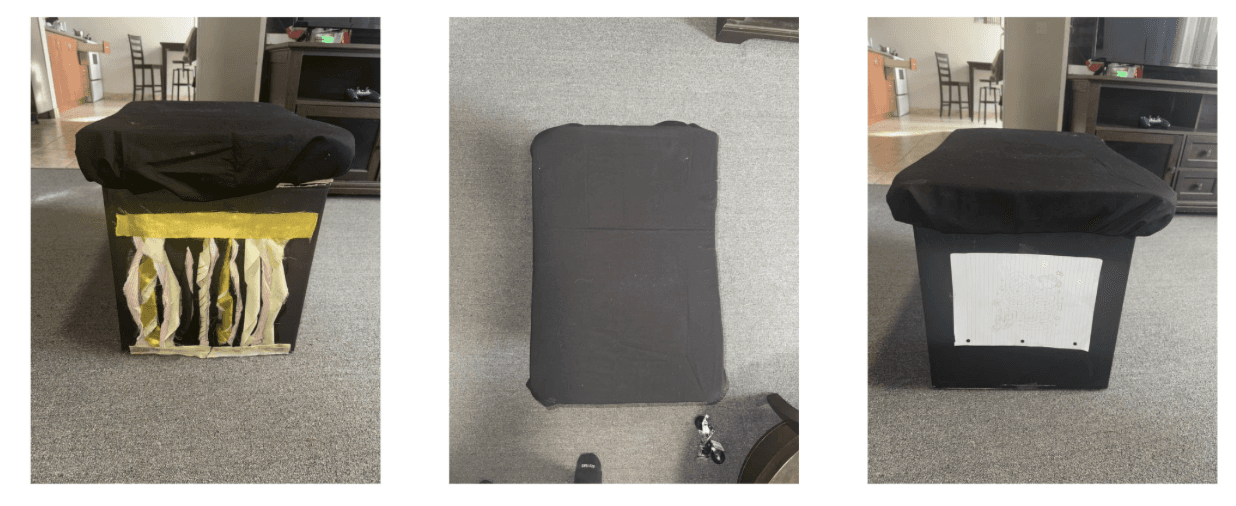
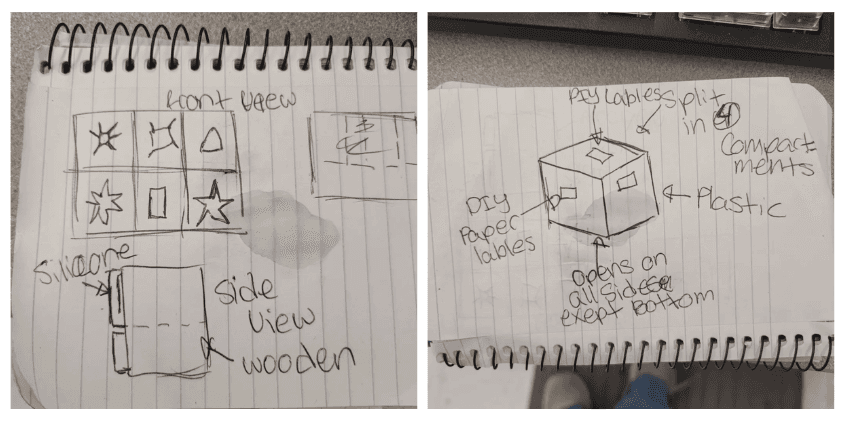
1. Storage space for toys in box interior, organized via separate compartments and accessed by lifting box lid
2. Comfortable, soft seat on the box lid for children to sit on
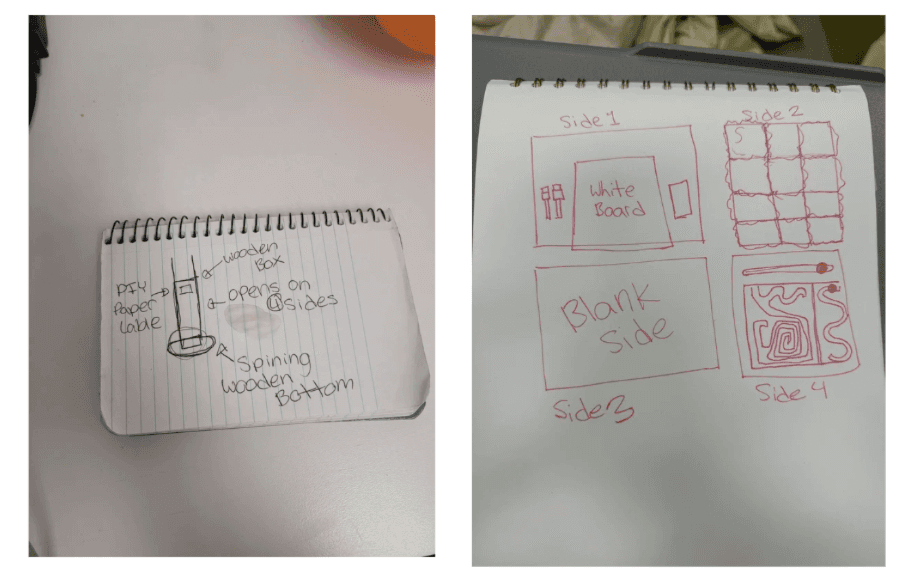
3. Built-in toys on sides of box:
Adjustable whiteboard to draw on (fosters creativity)
Ball-in-a-maze toy (trains hand-eye coordination)
Sensory stimulation toy featuring different fabrics (teaches colors, soothing touch and feel)
4. Lockable wheels on bottom of box for easy mobility, lockable so box can stay in place once moved
Production methods
Cut box into correct shape (box lid, slots for wheels)
Assembled seat using foam and felt fabric, attaching to box
Taped wheels to bottom of box
Cut strips from fabric and glued to box side for stimulation toy
Painted box sides
Used paper to represent whiteboard and ball-in-a-maze toy on box sides

NEW
UX Case Study
•
DiversiHire